
The Quiet Reality of the UK Wedding Industry in 2026
Most wedding suppliers believe success comes down to being better than competitors — better photography, better venues, better artistry. But in most local wedding markets, the suppliers winning bookings are not always the best. They are the suppliers couples discover first.
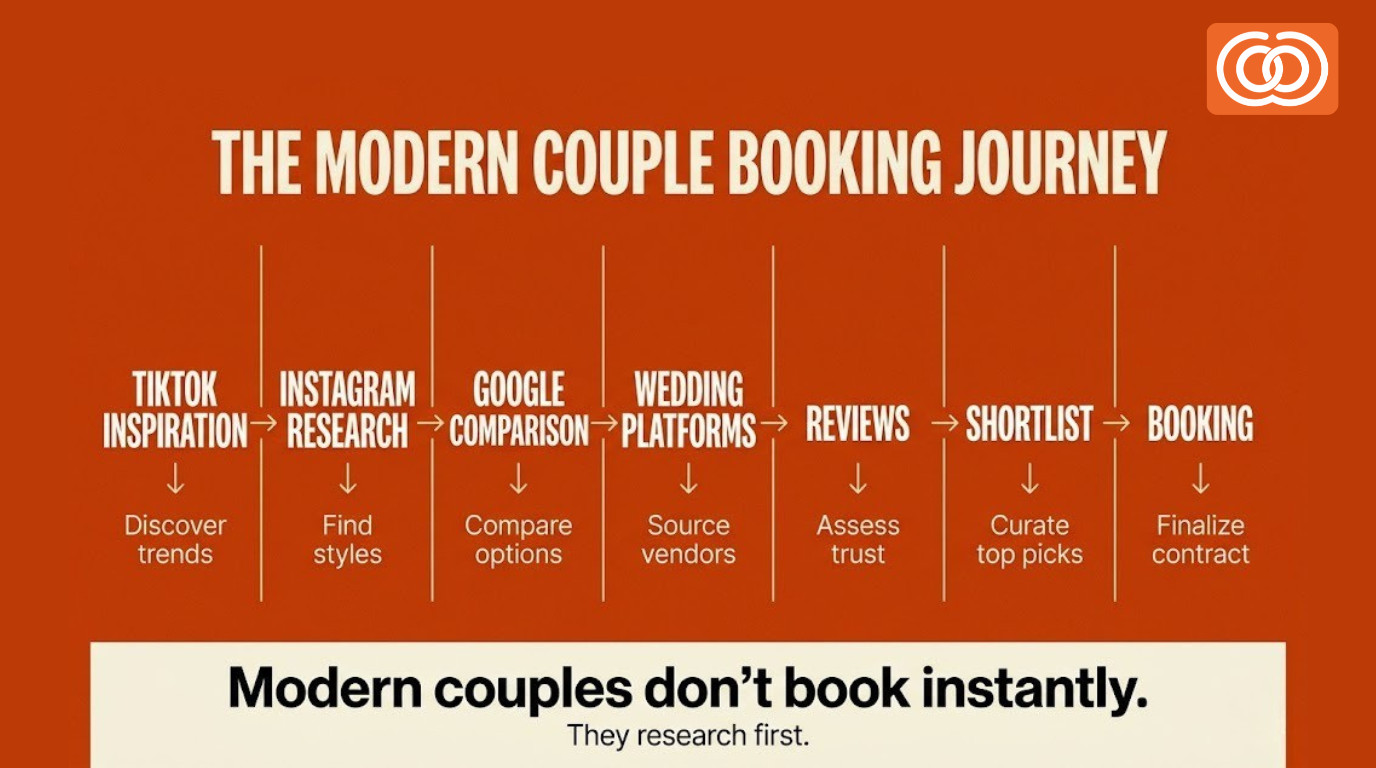
The way couples discover suppliers has shifted. The old path of Google → recommendations → Instagram → email enquiries has fragmented. By the time many couples contact suppliers, they have already mentally shortlisted who they trust. Which creates a difficult reality: if you are discovered late, you compete harder for the same booking.
The pattern is consistent across the UK wedding industry:
|
Suppliers discovered early tend to benefit from |
Suppliers discovered late tend to compete on |
|---|---|
|
More enquiries |
Price |
|
Stronger positioning |
Urgency |
|
Better pricing power |
Availability |
|
Less discount pressure |
Working harder for attention |
|
Higher trust |
Lower margins |
This is one of the least discussed dynamics in the industry, and it explains why early movers frequently outperform late adopters — even when quality levels are similar.
Visibility Compounds
A supplier discovered earlier has advantages that stack over time. Consider two photographers in the same market:
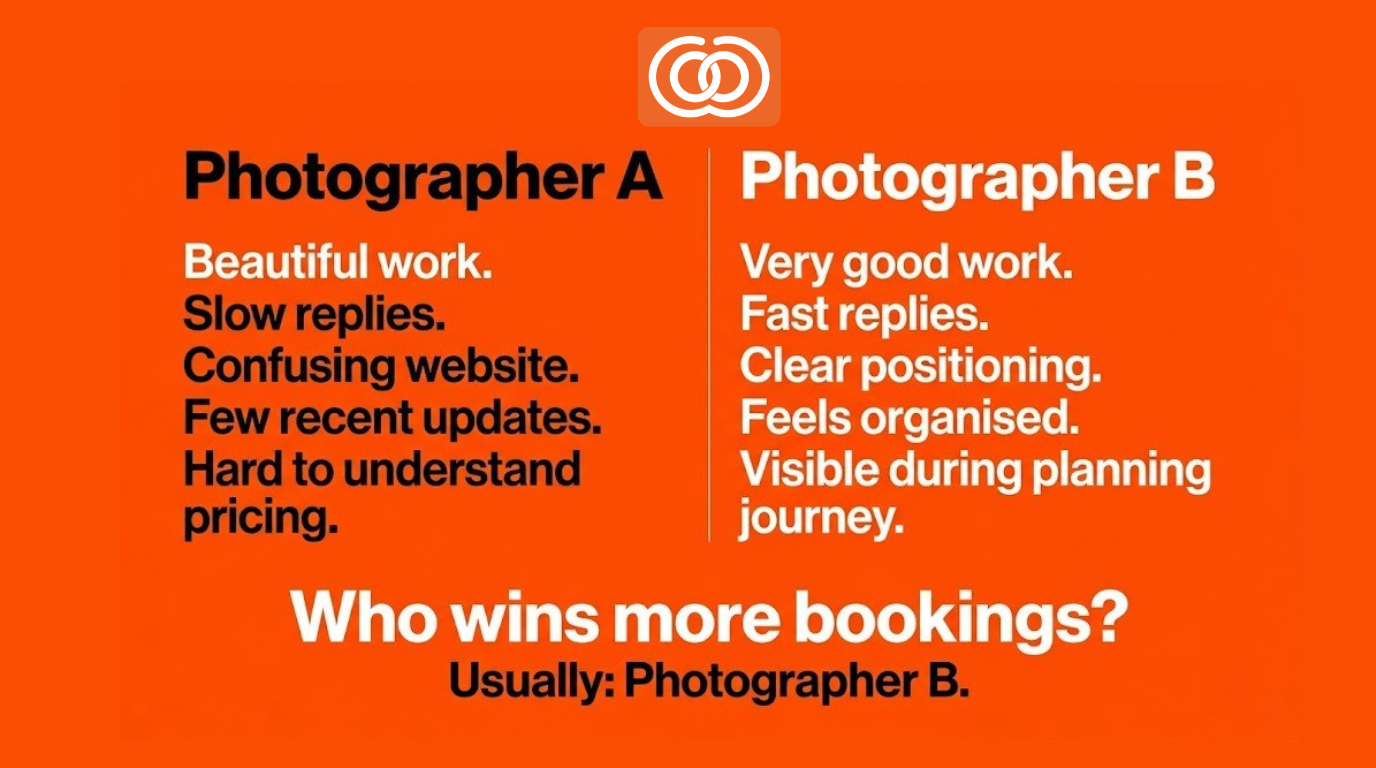
In most markets, Photographer A wins — not because they are more talented, but because discovery is cumulative. Wedding planning is a trust-based purchase. Couples are not simply buying a service; they are buying reassurance. With the average UK wedding now costing tens of thousands of pounds, risk, familiarity and trust all matter — and repeated visibility creates all three.
How Couples Actually Decide
Most suppliers assume couples choose rationally. They rarely do. Couples justify decisions rationally but begin emotionally — the photographer feels reassuring, the venue feels right, the florist understands the vision. Logic follows. That emotional sequence plays out across five fairly predictable stages:
|
Stage |
What the couple is asking |
|---|---|
|
1. Discovery |
Who exists? |
|
2. Shortlisting |
Who feels right? |
|
3. Trust evaluation |
Can I trust them? |
|
4. Enquiry |
Are they available? |
|
5. Decision |
Do we book? |
A surprising number of businesses lose at Stage 1 — not because they are bad, but because couples never discovered them in time, or discovered competitors first. First impressions matter more in weddings than in most industries because the purchases are emotional and expensive. Trust accumulates through repeated exposure, which is why early positioning matters so much.
Why Waiting Feels Safe (But Often Costs More)
Many suppliers delay joining new opportunities because waiting feels lower risk. Commercially, it often becomes higher competition risk. Marketplaces tend to evolve through three predictable stages:
|
Stage |
What it looks like |
|---|---|
|
Early opportunity |
Low competition, few suppliers, higher visibility, easier positioning. Most businesses ignore it. |
|
Momentum |
Couples begin using the platform, word spreads, reviews accumulate, competition rises. |
|
Saturation |
Everyone joins, standing out becomes harder, advertising becomes more expensive, late suppliers work harder for similar results. |
The suppliers who move earlier are not necessarily smarter. They simply benefit from timing — and that timing compounds in ways late entrants find difficult to recreate.
The Cost of Being Late Is Rarely Obvious
The downside of waiting is hard to see, because you rarely notice the enquiries you never received, or the supplier profile a couple saw before yours. Inaction feels harmless, but hidden costs still exist.
Consider a photographer who misses just two weddings a month at a £1,500 average booking value. That is £36,000 per year in lost revenue — before counting the referrals, tagged content, repeat visibility, and venue relationships those bookings would have generated. Opportunity compounds. Missed opportunity compounds, too.
See Wedding Demand Before Competitors Do
Wedding planning activity is already happening across the UK. Some areas are moving faster than others. Some categories are filling faster than others. The suppliers who understand local demand early usually position themselves more effectively.
Explore local wedding demand by location, category and budget band — and see where couples are already planning.
→ Claim your early access spot
Final Thought
There is an old saying in business: “The best time to build visibility was yesterday. The second-best time is now.”
The wedding industry is changing. Couples are discovering suppliers differently. Trust is being formed earlier. Competition is becoming more digital. And the suppliers who adapt first are often the suppliers who benefit most.
The better question is not whether wedding planning behaviour will continue changing — it already has. The question is: will couples discover your business early enough to shortlist you?