
Most couples don't go over budget by accident.
They make small mistakes early — a venue booked before the budget is set, a quote accepted without checking for VAT, a guest list that crept up by twenty people over three months. None of these feels catastrophic in the moment. But by the time the invoices arrive, the damage is already done.
Research across the UK wedding industry consistently points to the same pattern: it's not one big decision that blows a wedding budget. It's the accumulation of smaller oversights — in tax, logistics, and contract terms — that individually cost hundreds and collectively cost thousands.
Here are the seven mistakes that come up most often, and exactly how to avoid them.
Mistake 1: Not Setting a Budget Before You Do Anything Else
This is the foundational error from which almost every other mistake follows.
The average UK wedding in 2026 costs £20,604. But that figure is meaningless until you know your own number — not a rough estimate, not a hope, but a real total that accounts for your savings, any family contributions, and what you're genuinely willing to borrow.
The problem is that most couples begin browsing venues before they've done this work. They fall in love with a £7,000 barn before they know their venue budget is £4,000. They book a photographer at the top of their range before realising catering is going to cost significantly more than they assumed. Every subsequent decision then becomes a compromise — and the compromises compound.
Research into common budgeting mistakes shows that couples who begin the booking process before fully understanding their financial picture consistently end up making difficult and expensive trade-offs later in the planning cycle.
What to do instead:
Before you enquire about a single venue, establish three things: your total number, your non-negotiables (the one or two things you genuinely care most about), and your contingency fund. That last point matters more than most people realise.
Professional planners recommend a dedicated buffer of 10–15% on top of your total budget — not for major disasters, but for the accumulation of smaller fees that don't show up in any initial quote. Marriage licence fees, beauty trials, postage, alterations — these can collectively total over £2,000 on their own. A 15% contingency absorbs most of it.
💡 Pro tip: A £20,000 budget should include a £3,000 reserve that you treat as untouchable until the day itself. A £25,000 budget should ring-fence £3,750. If you don't use it, brilliant — it becomes part of your honeymoon fund.
Mistake 2: Booking Your Venue Before Your Budget
This is the most common sequence error in UK wedding planning — and one of the most expensive.
Your venue isn't just a location. It's the budget shaper — the decision that dictates the logistical requirements and costs of almost every other category. Your venue determines your guest capacity, your style, your supplier options, and a substantial chunk of your total spend. Book it without a clear budget, and you've handed control of your finances to a sales brochure.
There's also a geographical dimension that most couples underestimate. Weddings in London and the South East command a premium of 31–45% above the national average. Couples who travel from one region to marry in another — from the North West to the Cotswolds, for instance — frequently fail to recalibrate their budget for the 20–30% price differential in local supplier rates. The venue hire looks manageable; it's the local photographers, florists, and caterers that close the gap.
Timing matters just as much as location. Shifting your wedding from a Saturday in peak season to a midweek date or an off-peak month can reduce venue hire fees by 20–40%. The average Saturday wedding costs £22,290. The average Tuesday wedding costs £16,273. That single scheduling decision is worth £6,000 — before you've negotiated anything.
What to do instead:
Set your budget in full before you shortlist a single venue. Then ask every venue two questions upfront: what is your cheapest available date in the next 18 months, and does that price include VAT? The answers will tell you more than any brochure.
💡 Pro tip: Suppliers such as photographers and musicians are often more open to negotiation on midweek dates that would otherwise remain unbooked. The savings don't stop at the venue.
Mistake 3: Ignoring Hidden Costs
This is where the average overspend of £4,200 actually comes from.
Perhaps the most significant financial shock encountered by UK couples is the discovery of hidden service charges and the application of VAT. In the UK, the standard rate of VAT is 20% — and its routine exclusion from initial venue brochures and catering quotes can fundamentally alter a budget overnight.
The failure to ask "Is this price inclusive of VAT?" can lead to a budget deficit of nearly £4,000 on core elements alone. On a £10,000 venue quote, that's a £2,000 bill you weren't planning for. On a £5,000 catering quote, it's another £1,000.
And then there's the service charge — separate from VAT, and equally easy to miss. UK venues and hospitality firms frequently apply a mandatory service charge of 10–15% on top of the food and beverage bill. On a £7,000 catering invoice, a 15% service charge adds £1,050 before you've touched a glass.
Beyond the two big ones, the smaller costs stack up in ways that catch nearly everyone out:
Cake-cutting fee: Up to £7 per guest. For 100 guests, that's £700 charged for the privilege of having your own cake sliced.
Corkage fees: If your venue offers a bring-your-own-bottle option, read the small print carefully. Corkage fees commonly range from £15 to £30 per bottle of wine and up to £40 for spirits. A bottle of Prosecco bought wholesale for £10 with a £15 corkage fee costs you £25 — often identical to the venue's house package, but with all the logistical risk of transport and breakage sitting with you.
Vendor meals: Professional photographers, videographers, and musicians working an 8–12 hour day typically require a hot meal as part of their contract. Budget for 2–6 additional plates — this frequently costs £100–£900 in total and is one of the most common line items missed during initial planning.
Dress alterations: The average UK wedding dress costs £1,532 — but alterations add £200–£800 on top, requiring 2–3 additional fittings. Hair and makeup trials are rarely included in the day-of fee either, running £50–£150 per service per person.
What to do instead:
Get every quote in writing and confirm explicitly whether it includes VAT and service charges. Build a hidden costs checklist — cake cutting, corkage, vendor meals, alterations, overtime — and allocate a budget line for each before you finalise any supplier agreements.
Mistake 4: Letting Your Guest List Grow Without Understanding the Cost
The guest list is the single most powerful lever in your wedding budget. It's also the one most couples handle emotionally rather than financially.
The financial structure of a wedding is traditionally divided into fixed and variable costs. Fixed costs — venue hire, photography, and entertainment — remain broadly stable regardless of guest numbers. Variable costs, primarily catering and beverages, scale directly with headcount. Every additional guest adds not just a plate of food, but a chain of smaller costs: an additional invitation, a chair, a menu card, a place setting, and a section of the seating plan.
Here's the counterintuitive reality: the average cost per guest actually decreases as your guest list grows, because the fixed costs are spread across more people. 50 guests costs around £15,162 (£303 per head). 100 guests costs around £22,510 (£225 per head). Cutting from 100 to 50 guests saves roughly £7,000 — but most of that saving comes from catering and seating, not from photography, the band, or the flowers, which cost the same either way.
The mistake isn't having a large guest list. The mistake is extending invitations before you understand which budget categories a larger list actually affects — and which ones it doesn't.
What to do instead:
Build your guest list in tiers. Your A list is everyone you'd genuinely be upset not to have present. Your B list is people who matter but aren't essential. Finalise your venue capacity first — then build your list within it, not the other way round.
Also consider splitting your celebration. Inviting 60 people to a sit-down day reception and 120 to an evening do (where catering costs per head are significantly lower) is frequently more cost-effective than feeding all 120 a plated dinner.
💡 Pro tip: Every "plus-one" added to the guest list has a ripple effect cost that includes not just food but stationery, furniture rentals, staffing, and potentially the required size of your venue or marquee. Run the numbers before you extend the invitation.
Mistake 5: Not Tracking Your Spending Throughout
This is where couples with a solid initial budget still end up in trouble.
By the time you're six months into planning, you'll have supplier contracts at multiple payment stages, a guest list with RSVPs arriving in different directions, dietary requirements to manage, and a budget that's evolved since you first set it. Without a single place to track what you've committed to, what you've paid, and what's still outstanding, things get missed — and missed things cost money.
The classic version of this mistake is paying deposits across multiple suppliers, losing track of the running total, and not realising you've already exceeded your budget until the final payments come due. Failure to ring-fence your contingency fund often leads to a reliance on high-interest credit or the late-stage cancellation of essential services — neither of which is a comfortable position weeks before your wedding.
What to do instead:
Maintain a live budget tracker from the day you start planning. It needs four columns: what you've committed to, what you've paid, what's outstanding, and what remains in your total budget. Update it every time a deposit goes out or a contract is signed. Share it with your partner so both of you always know where you stand.
Alongside the budget, maintain a supplier contact sheet with names, numbers, contracts, and payment schedules — and a day-of timeline that every key supplier has reviewed and confirmed.
👉 Avoid These Mistakes Completely
Use the free Wedvisa planner — track your budget, organise your suppliers, and stay in control from day one.
✔ Track your budget
✔ Organise suppliers
✔ Stay in control
Mistake 6: Booking Too Late
The best venues and the most sought-after photographers in the UK book up 12–18 months in advance, particularly for Saturday slots in peak season. Losing your first-choice suppliers to poor timing is one of the most common — and most avoidable — planning regrets.
The cost of booking late isn't always obvious. Sometimes it means paying a premium for a supplier who has late availability because they're less experienced. Sometimes it means accepting your second-choice venue at a price that doesn't reflect its quality. And sometimes it means paying rush fees — which are significantly higher than standard rates — for services like floristry or stationery that were left until the last few months.
A significant trend in UK wedding contracts is the insertion of inflation clauses or cost-of-living adjustments — particularly from venues seeking to protect their margins over long lead times. The earlier you lock in a price in writing, the less exposed you are to mid-planning cost increases. In a fluctuating economy, the cost of a registrar can increase between the time of inquiry and the actual booking due to annual April price adjustments — another reason to confirm and pay deposits early.
What to do instead:
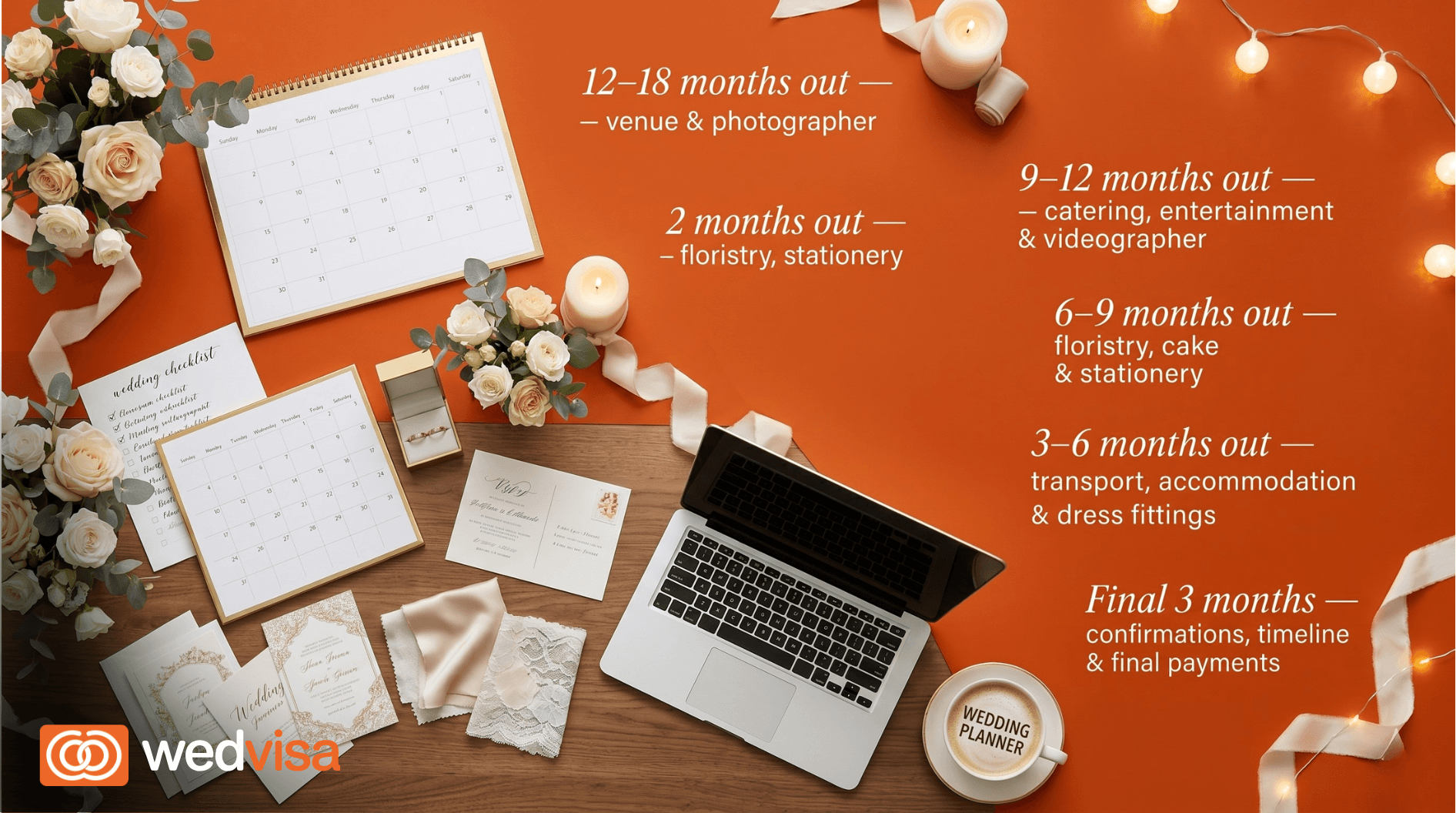
As soon as you have a budget and a rough guest count, start the venue search. Book the venue before anything else. Then lock in your photographer and entertainment — the two categories where availability and quality are most tightly correlated. Catering, floristry, and stationery can follow, but don't leave them past the six-month mark.
General booking timeline:
💡 Pro tip: Always confirm in writing what happens if a supplier is unavailable on the day — illness, equipment failure, or business closure. Under the Consumer Rights Act 2015, suppliers cannot add unexpected costs to a bill unless explicitly agreed in advance — but you need a clear contract to enforce that protection.
Mistake 7: Not Comparing Suppliers — or Comparing Them Incorrectly
Most couples get multiple quotes for their venue. Far fewer do the same for their photographer, caterer, florist, or entertainment. And of those who do compare quotes, many compare figures that aren't comparable — net versus gross, VAT-inclusive versus VAT-exclusive, with and without service charges.
Comparing a "gross" quote from an independent supplier with a "net" quote from a larger VAT-registered firm without verifying whether the 20% tax is yet to be applied is a routine mistake that distorts the apparent cost difference between suppliers. A smaller florist quoting £800 and a larger firm quoting £960 may actually be quoting the same price once VAT is added to the first figure.
There's also the question of what's included. Food trucks and street food options — often assumed to be cheaper than a formal sit-down dinner — may require the hire of additional furniture, cutlery, and service staff that would otherwise be included in a formal caterer's quote. A catering quote that looks 30% cheaper on paper may close that gap entirely once you add the infrastructure it assumes you're providing.
A less-discussed risk is the hidden commission structure. A conflict of interest can arise when wedding planners accept undisclosed commissions from the suppliers they recommend. If your planner's recommendation list skews consistently toward the same suppliers, it's worth asking directly whether they receive a referral fee — and whether that fee is disclosed in their contract with you.
What to do instead:
Get at least three quotes for every major supplier category. Before comparing them, confirm with each supplier:
Does this price include VAT?
Is there a service charge on top?
What is and isn't included in this figure?
Only once every quote is on the same VAT-inclusive, fully-itemised basis can you make a meaningful comparison.
Also, ask every venue whether they charge an external vendor fee — some venues charge £200 to £1,000 for the privilege of bringing in a photographer or florist who isn't on their approved list. This is often framed as a coordination fee, but it's effectively a penalty for choosing your own suppliers. Know about it before you sign anything.
The Common Thread
Every mistake on this list shares the same underlying cause: a decision made before the full financial picture was clear.
The couples who stay on budget aren't necessarily the ones with more money or more time. They're the ones who set a real budget before browsing anything, tracked it consistently throughout, and asked the right questions before signing any contract.
The good news is that none of this requires a professional planner or a spreadsheet degree. It requires a clear starting point and a reliable place to track everything as you go.
👉 Plan smarter and avoid costly mistakes — start free on Wedvisa
Your budget, your suppliers, your guest list — all in one place.